SCHEDULE A FREE EXAMINATION!
+387 51 230 700
 WORK TIME
Monday - Friday
-
08:00 - 20:00
Saturday
-
09:00 - 13:00
Sunday
-
Day off
Address
-
Vidovdanska 2, Banja Luka
CONTACT
Mob:
+387 65 233 88 (VIBER)
Tel:
+387 51 230 700
Tel:
+387 51 230 701
E-mail:
ordinacija@simicdent.com


MENI
- Home
- Services
- ESTHETIC DENTISTRY
- DENTAL PROSTHETICS
- PERIODONTIC
- ORAL SURGERY
- CONSERVATIVE DENTISTRY AND ENDODONTICS
- PEDIATRIC AND PREVENTIVE DENTISTRY
- ORTHODONTICS
- HYALURONIC TREATMENT
- LASER THERAPY
- OZONE THERAPY
- DIGITAL DENTAL X-RAY (RTG)
- Straumann implant placement. A quick and painless routine procedure with an experienced oral surgeon - implantologist - Banja Luka
- Subperiosteal implants
- News
- Team
- Dental tourism
- Contact
-
 English


 English
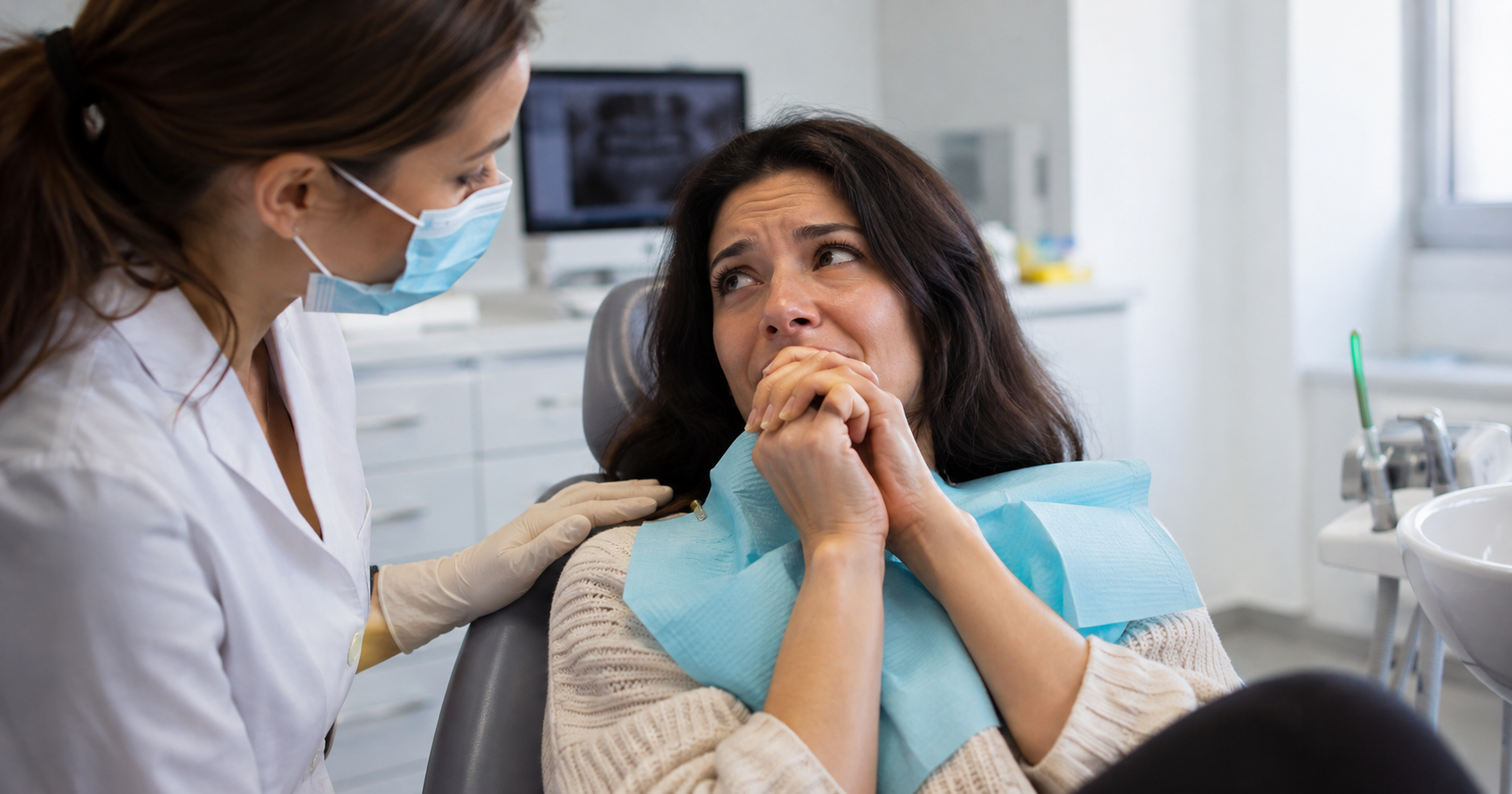
Fear of the Dentist: Why Does It Happen and How Can You Overcome It?
You've booked a dental appointment. But as the date approaches, you start thinking about canceling it. What if it hurts? What if the anesthesia doesn't work? What if the dentist discovers a serious problem?
Perhaps even the thought of the sounds coming from a dental office makes you want to postpone your appointment until another day. And so the months go by. Sometimes even years.
If this sounds familiar, you probably know just how overwhelming dental anxiety can be. But what you may not know is that there are ways to gradually overcome it.
Why Are So Many People Afraid of the Dentist?
Fear of the dentist often goes beyond dental treatment itself. It may stem from negative past experiences, fear of pain, feelings of helplessness, or embarrassment about the condition of one's teeth.
Some people had a painful experience at the dentist as children. Others are afraid of anesthesia injections. For some, the most uncomfortable part is being unable to speak while the dentist is working.
There are also patients who avoid dental appointments for years because they feel embarrassed about missing teeth, cavities, or other dental problems.
Whatever the reason, it's important to understand that fear of the dentist doesn't have to be overcome all at once.
Dental Anxiety vs. Dentophobia: What's the Difference?
Not every feeling of discomfort before a dental appointment qualifies as dentophobia.
Dental anxiety refers to nervousness, worry, or tension associated with visiting the dentist.
Dentophobia, or an intense fear of dental treatment, can be much more severe. Some patients experience a racing heartbeat, sweating, nausea, or panic simply when scheduling an appointment.
In more severe cases, this fear can lead to completely avoiding dental checkups.
The good news is that different approaches can help, from personalized communication and gradual exposure to dental procedures to professional psychological support for severe dental phobias.
Does Dental Treatment Really Have to Hurt Today?
This is probably one of the first questions people with dental anxiety ask.
Modern local anesthesia allows many dental procedures to be performed without sharp pain. However, it's important to distinguish pain from sensations such as pressure, touch, or vibration.
During a filling or tooth extraction, you may still experience certain sensations even when the anesthesia is working properly.
If you feel pain, it's important to signal your dentist immediately. The procedure can be paused so the effectiveness of the anesthesia can be assessed and the treatment adjusted if necessary.
You should never be expected to simply endure pain.
How to Overcome Fear of the Dentist: Five Steps That Can Help
1. Your First Visit Doesn't Have to Involve Dental Treatment
One of the best ways to start overcoming dental anxiety is to schedule an appointment for a checkup and consultation only.
Meet your dentist, talk about your fears, and find out about the condition of your teeth.
Knowing what to expect can make your next visit less stressful.
2. Tell Your Dentist Exactly What You're Afraid Of
Being afraid of pain, needles, the sound of dental instruments, or losing control are very different concerns.
The more specifically you explain what makes you anxious, the easier it will be for your dentist to understand how to approach your treatment.
You can simply say:
"I have a strong fear of the dentist, and I need you to explain what you're doing."
3. Agree on a Signal for Taking a Break
Imagine being able to raise your hand during a dental procedure to request a short break.
This simple agreement can make a significant difference in how much control you feel you have.
Knowing that you can ask your dentist to stop and talk to you can help reduce uncertainty and anxiety.
4. Don't Try to Overcome Your Entire Fear at Once
If you haven't visited a dentist in years, you don't necessarily have to begin extensive dental treatment immediately, unless there is an urgent problem.
Some patients feel more comfortable with a gradual approach: starting with a conversation, followed by an examination, and then proceeding with treatment according to an agreed plan.
Every positive experience can help build trust.
5. Focus on What You'll Gain, Not Just What You're Afraid Of
Dental anxiety often leads us to imagine the worst possible scenario.
Instead, think about what resolving the problem you've been avoiding would mean to you.
Perhaps it's being able to eat without pain, smile confidently again, or simply stop worrying about a tooth that has been bothering you for a long time.
What If You Haven't Been to the Dentist in Years?
If you've been postponing a dental appointment for a long time, your biggest concern may no longer be the procedure itself, but rather the question:
"What will the dentist think when they see my teeth?"
This is a common reason why people delay dental visits.
However, the purpose of a dental examination is to assess your current oral health and find the most appropriate treatment.
What matters isn't just how long it's been since your last appointment. What matters is what can be done now.
Keep in mind that tooth decay, gum disease, and other dental problems can progress without noticeable symptoms. A timely dental examination can often help prevent the need for more complex treatment.
When Does Fear of the Dentist Become a Serious Problem?
If fear is preventing you from visiting the dentist despite severe toothache, swelling, or signs of infection, it's important to seek dental care as soon as possible.
Significant swelling, particularly when accompanied by difficulty breathing or swallowing, requires emergency medical attention.
Your fear is understandable, but postponing treatment doesn't eliminate the underlying dental problem.
What to Expect During Your First Visit to Simić Dent in Banja Luka
If you experience dental anxiety and are looking for a dental clinic in Banja Luka, your first step can simply be an examination and a relaxed conversation with your dentist.
At Simić Dent Center for Aesthetic Dentistry, you can discuss the problem that brought you in, receive an explanation of the proposed treatment, and ask any questions that concern you.
Our dentists are specially trained to work with patients who experience dental anxiety and dental phobia.
It's particularly important to inform your dentist in advance if you've had an unpleasant experience in the past or feel intense fear about undergoing a dental procedure.
Based on a clinical examination and, when necessary, additional diagnostic tests, an appropriate treatment plan will be developed.
Frequently Asked Questions About Dental Anxiety
How Can I Overcome My Fear of the Dentist?
You can gradually reduce dental anxiety through open communication with your dentist, becoming familiar with dental procedures, and agreeing on how to communicate during treatment.
For patients with severe dentophobia, psychological therapy may also be helpful.
Does Tooth Extraction Hurt?
Tooth extraction is usually performed under local anesthesia, which prevents pain during the procedure.
You may still feel pressure, and some discomfort can occur after the anesthesia wears off.
What If the Anesthesia Doesn't Work?
If you experience pain during a dental procedure, inform your dentist immediately.
Your dentist can check whether the anesthesia is working effectively and determine whether additional measures are needed.
Can Fear of the Dentist Be Completely Overcome?
For many people, dental anxiety can be significantly reduced.
The outcome depends on the intensity of the fear, previous experiences, and the approach used to overcome it.
But perhaps you don't need to overcome your fear before taking the first step.
Maybe all you need to do is book an appointment.
Many people wait for their fear of the dentist to disappear completely before scheduling a visit.
But sometimes, it's through positive experiences with a dentist that this fear gradually begins to fade.
You don't have to feel completely relaxed to take the first step.
If you're struggling with dental anxiety, contact Simić Dent in Banja Luka and schedule an appointment.
Our dental center is located at 2 Vidovdanska Street, Banja Luka, Bosnia and Herzegovina.
Your first step toward a healthier smile can be as simple as having a conversation.
16. Oktobar. 2026
Podijeli na društvenim mrežama: Facebook