SCHEDULE A FREE EXAMINATION!
+387 51 230 700
 WORK TIME
Monday - Friday
-
08:00 - 20:00
Saturday
-
09:00 - 13:00
Sunday
-
Day off
Address
-
Vidovdanska 2, Banja Luka
CONTACT
Mob:
+387 65 233 88 (VIBER)
Tel:
+387 51 230 700
Tel:
+387 51 230 701
E-mail:
ordinacija@simicdent.com


MENI
- Home
- Services
- ESTHETIC DENTISTRY
- DENTAL PROSTHETICS
- PERIODONTIC
- ORAL SURGERY
- CONSERVATIVE DENTISTRY AND ENDODONTICS
- PEDIATRIC AND PREVENTIVE DENTISTRY
- ORTHODONTICS
- HYALURONIC TREATMENT
- LASER THERAPY
- OZONE THERAPY
- DIGITAL DENTAL X-RAY (RTG)
- Straumann implant placement. A quick and painless routine procedure with an experienced oral surgeon - implantologist - Banja Luka
- Subperiosteal implants
- Team
Gallery
- Dental tourism
- News
- Contact
-
 English


 Eng
SCHEDULE A EXAMINATION!
+387 51 230 700
WORK TIME
Monday - Friday
08:00 - 20:00
Saturday
09:00 - 13:00
Sunday
Day off
Address:
Vidovdanska 2, Banja Luka
 CONTACT
Mob:
+387 65 233 888 (VIBER)
Tel:
Tel:
E-mail:
 MAKE AN APPOINTMENT!
ORTHODONTICS
Orthodontics is a specialized branch of dentistry focused on correcting irregularities in the position of teeth and jaws. In addition to contributing to a more aesthetically pleasing smile, orthodontics plays a crucial functional role by addressing issues that can make everyday activities - such as chewing, speaking, or proper jaw closure - more difficult. When teeth are not properly aligned, the forces exerted during chewing can be unevenly distributed, which over time can lead to tooth damage and jaw joint pain.
In the past, orthodontic treatment was almost exclusively applied during adolescence, but today an increasing number of adults seek orthodontic help.
People over the age of 25 are more frequently choosing to wear braces or clear aligners to correct dental irregularities that were not treated earlier.
Depending on age, type of irregularity, and the patient’s needs, we recommend different types of orthodontic solutions.
Fixed braces are most commonly used, as they provide excellent and long-term results by continuously acting on the position of the teeth.
Thanks to modern materials and techniques, orthodontic therapy is now effective at any age, provided it is planned individually, according to the patient’s needs and capabilities.

Ortodonske folije za zube – ClearCorrect

Orthodontic aligners are a discreet, effective, and aesthetically pleasing solution for correcting misaligned teeth. These transparent, nearly invisible aligners have become the first choice for many adult patients, as well as an increasing number of teenagers seeking a perfect smile.
What are orthodontic aligners?
Orthodontic aligners are a series of clear, custom-made trays that gradually shift teeth into the desired position. They are created based on a digital impression of the jaw, and the therapy is planned and visualized in advance. Each set is worn for two to three weeks before moving on to the next one, until the desired result is achieved.
Who is a candidate for aligners?
Aligners are ideal for patients who:
-
Have mild to moderate dental misalignment
-
Have gaps between teeth
-
Have rotated teeth
-
Want to correct a relapse after previous orthodontic treatment
In more complex cases, a fixed appliance may be a better option. At our clinic, we tailor each treatment individually – because there is no one-size-fits-all solution for a smile.
Advantages of aligners
-
Discretion – aligners are almost invisible
-
Comfort – no metal parts that irritate lips and gums
-
Hygiene – aligners are removed for eating and brushing
-
Precision – every tooth movement is digitally pre-planned
-
Flexibility – they can be taken out for special occasions (meetings, photos, etc.)
What does the process look like?
- Consultation and examination – Orthodontist assesses the condition
- Digital scan – Accurate digital impression of the jaw
- Treatment plan – We create a detailed plan of tooth movements
- Aligner production – Aligners are made based on the plan
- Monitoring progress – Regular check-ups and aligner changes
Cost of aligners
The number of aligners needed is individual. Patients receive this information after examination, diagnostic analysis, and digital impressions. Based on this, a ClearCorrect package is selected. Prices range from BAM 1,500 to 6,000 depending on the number of aligners. Treatment usually lasts 6–18 months, depending on the initial condition and goals. Success depends on wearing aligners 20–22 hours a day.
Will the results last after treatment?
As with any orthodontic method, teeth can try to return to their original position. That’s why retention is essential. We create retainers for every patient – either in the form of clear trays or a thin wire fixed behind the teeth, invisible and comfortable.
We also enable you to complete all key diagnostics in your first visit:
-
2D X-ray (OPT)
-
CEPH analysis for precise planning
-
Intraoral and profile photos
-
Digital impressions and study models
From consultation to final retention – we are with you every step of the way. Your only task is to wear your aligners consistently – we’ll handle the rest.
Are you a candidate for fixed braces?
A candidate for orthodontic treatment with braces is a person who has irregularities in the position of the teeth, jaws, or bite that can be corrected using orthodontic appliances (fixed or removable). Here is a detailed overview of who can be a candidate:
Children and adolescents
Monitoring of jaw growth and development can begin as early as age six or seven. The ideal time to start therapy is between ages 9 and 14, when the teeth and jaws are still developing and most permanent teeth have already erupted.
Common issues include: crowding, spacing (diastemas), open bite, crossbite, deep bite, protruding front teeth, etc.
Adults
Age is not a limitation—more and more adults are wearing braces. Possible reasons include: dissatisfaction with the aesthetics of the smile, bite disorders affecting chewing or speech, preparation for prosthetic treatment (e.g., implants or crowns), relapse after previous orthodontic therapy (e.g., not wearing or improperly wearing a retainer), etc.
Situations where orthodontic treatment is recommended:
-
Teeth that have grown in misaligned or not at all
-
Teeth that are rotated or overlapping
-
Jaws that are not properly aligned with each other
-
Difficulty closing the mouth (malocclusions)
-
Speech or swallowing disorders
-
Excessive tooth wear due to bite irregularities
-
Jaw pain (e.g., TMJ dysfunction)
Why is it important to straighten your teeth?
An incorrect position of the teeth is not only an aesthetic concern but also a serious functional problem. When teeth are crowded or rotated, it becomes harder to clean all their surfaces, leading to plaque buildup and an increased risk of cavities and gum inflammation. Additionally, a poor bite can cause jaw pain, dysfunction of the jaw joints, and discomfort during chewing. Over time, improperly distributed chewing forces can lead to accelerated tooth wear, affecting their durability.
On the other hand, aesthetics play a major role in a patient’s self-confidence. People who are not satisfied with the appearance of their smile often subconsciously hold back from laughing, cover their mouth while speaking, and avoid being photographed. Straightening the teeth also brings psychological benefits by improving confidence and freedom of expression.
Who Is not a candidate for orthodontic treatment?
Orthodontic treatment is not suitable for everyone. These are examples when orthodontics is not the right solution for the patient:
-
Individuals with serious periodontal problems that have not been previously treated
-
Individuals who are not motivated to follow instructions (e.g. maintaining oral hygiene, attending regular check-ups)
-
Individuals with severe systemic diseases (a consultation with a physician is required)
Types of orthodontic appliances
The choice of orthodontic appliance depends on the individual diagnosis, the patient’s age, and their preferences regarding aesthetics and comfort. Fixed braces are the most common choice for more serious irregularities, as they allow precise control over the movement of each individual tooth. This system works by attaching a bracket to each tooth, with an archwire running through the brackets to apply pressure and move the teeth into the desired position.
Self-ligating braces are a more modern version in which the brackets have their own mechanism to hold the wire, eliminating the need for elastic bands. This results in less friction, faster results, and more comfortable check-ups.
Removable appliances are more commonly used in children, as their jaws are still developing. They can be taken out, which is both an advantage and a challenge—since the success of the treatment depends on the child’s discipline.
Clear aligners, such as Straumann ClearCorrect, are an excellent option for adults who want a discreet treatment. They are a series of transparent plastic trays custom-made for the patient and changed every two weeks to gradually shift the teeth.
Regardless of the type of treatment, it is important to stabilize the achieved results after orthodontic therapy. This is done with retention therapy—using clear retainers and/or fixed wires bonded to the inner surfaces of the teeth to prevent them from returning to their original position.
What does the orthodontic treatment process look like?
The orthodontic treatment process begins with the first consultation with an orthodontist. During this appointment, the position of the teeth and jaws is evaluated, the bite is analyzed, and necessary imaging is performed—most commonly a lateral cephalometric X-ray and CBCT scan. Additionally, digital scans of the teeth and bite are taken, along with facial and smile photographs. Based on all this data, the orthodontist creates an individual treatment plan.
The placement of fixed braces is a painless procedure that typically lasts between 45 minutes and one hour. The teeth are thoroughly cleaned and dried beforehand. Then, brackets are attached to each tooth using a special cement, and small tubes are placed on the molars to hold the archwire.
After that, the orthodontist threads the wire through the brackets and secures it with elastics. The wire applies pressure that initiates tooth movement.
After the placement, the next phase consists of regular check-ups, usually every four to six weeks. During these visits, the orthodontist checks the progress, adjusts the wire, changes the elastics, and modifies the treatment as needed. Once the desired result is achieved, the braces are removed and the patient enters the retention phase.
Oral hygiene maintenance
Wearing fixed braces requires a special oral hygiene routine. Since brackets, wires, and elastics create additional surfaces where food particles and plaque can easily accumulate, regular and proper hygiene is essential to maintain the health of the teeth and gums throughout the treatment.
As soon as the appliance is placed, the patient must adopt habits that will prevent the development of cavities, gum inflammation, and bad breath. If hygiene is neglected, white spots may appear around the brackets—these are signs of enamel demineralization, which can later turn into cavities.
Brushing becomes a more detailed and thorough process—it is recommended to use an orthodontic toothbrush with a V-shaped cut that allows better access to brackets and wires. In addition to standard brushing, interdental brushes should be used to clean the space between the wire and teeth, as well as dental floss with a stiff end or specialized orthodontic floss for precise cleaning between the teeth. Additional help comes from a water flosser (oral irrigator), which effectively removes food debris from hard-to-reach areas.
Patients are advised to brush their teeth after every meal. If that’s not possible, at least rinsing the mouth with water is recommended to remove larger food particles. In the morning and evening, thorough brushing for at least 3 to 5 minutes is suggested.
Using fluoride toothpaste is essential to strengthen the enamel and protect against cavities. In some cases, the orthodontist may also recommend additional fluoride gels or mouth rinses to support enamel remineralization.
It’s also important to monitor gum health—gums should not bleed during brushing. If bleeding, swelling, or redness occurs, this is a sign of gingivitis, most often caused by poor hygiene. Regular check-ups and professional cleanings by a dentist or orthodontist can prevent complications and keep the treatment on track.
Ultimately, maintaining hygiene with braces is not just about aesthetics—it is a necessary step to ensure successful treatment and keep your teeth healthy, strong, and beautiful after the braces come off.
How long does orthodontic treatment last?
The duration of treatment depends on the complexity of the orthodontic problem, the patient’s age, the type of appliance used, and the level of cooperation during the process. Typically, fixed braces are worn for 12 to 24 months, while clear aligners are worn for 6 to 18 months.
In cases of more severe irregularities, treatment may last up to three years. The success and length of treatment also depend on attending regular check-ups and following the orthodontist’s instructions.
Does wearing fixed braces hurt?
Wearing fixed braces does not cause intense pain, but a feeling of discomfort is common for a few days after placement or after an adjustment when the wire is tightened or changed. This sensation may include pressure, mild pain when chewing, and tooth sensitivity.
The discomfort is temporary and can be relieved with mild painkillers and by eating soft foods during the adaptation phase.
What Is retention and why is it important?
At the end of fixed braces therapy, in order to maintain the results and stabilize the teeth in their new position, a retention aligner or retention wire is required, which is placed on the teeth.
Retention is maintained using clear aligner trays that are worn for at least 20 hours per day at the beginning of the retention phase, and later typically only at night. Alternatively, fixed retainers can be placed on the inner side of the teeth.The duration of retention varies, but it is generally recommended to last at least as long as the active orthodontic treatment—and often significantly longer in adults.
Can you eat and speak normally with braces?
In the first few days after getting braces, speech may be slightly affected, but most patients adapt within a few days. When it comes to eating, it is recommended to avoid hard and sticky foods, as they can damage the brackets or wire.
Foods such as caramel, chewing gum, popcorn, and nuts should be avoided throughout the entire treatment. Patients are also advised not to bite their nails, pens, or similar objects, as this can affect the stability of the appliance.
How much does a fixed brace cost?
The price of a fixed brace in our clinic depends on the type of appliance. Traditional braces with metal brackets cost 1,500.00 BAM per jaw. The price includes the appliance itself, its placement, and all orthodontic check-ups until the end of the treatment.
Self-ligating braces cost 2,000.00 BAM, while braces with aesthetic (clear) brackets cost 2,500.00 BAM.
For our regular patients, installment payment is possible upon agreement with the orthodontist.
Why choose orthodontic treatment?
Orthodontic treatment is not just about aesthetics. Properly aligned teeth make oral hygiene easier, reduce the risk of gum and tooth diseases, prevent cavities, relieve stress on jaw joints and muscles, and improve chewing function.
The aesthetic aspect is not negligible either, as a straight smile contributes to a better first impression, greater self-confidence, and overall quality of life.
Conclusion
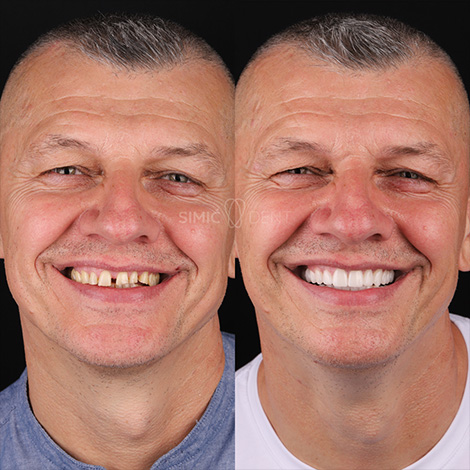
Fixed braces are a powerful tool that brings changes not only in aesthetics but also in the function of the entire oral system. Regardless of age, it is never too late to take the first step toward a healthier and more beautiful smile.
Scheduling a timely appointment with an orthodontist can change not only your smile - but also the way you feel in your own skin.