SCHEDULE A FREE EXAMINATION!
+387 51 230 700
 WORK TIME
Monday - Friday
-
08:00 - 20:00
Saturday
-
09:00 - 13:00
Sunday
-
Day off
Address
-
Vidovdanska 2, Banja Luka
CONTACT
Mob:
+387 65 233 88 (VIBER)
Tel:
+387 51 230 700
Tel:
+387 51 230 701
E-mail:
ordinacija@simicdent.com


MENI
- Home
- Services
- ESTHETIC DENTISTRY
- DENTAL PROSTHETICS
- PERIODONTIC
- ORAL SURGERY
- CONSERVATIVE DENTISTRY AND ENDODONTICS
- PEDIATRIC AND PREVENTIVE DENTISTRY
- ORTHODONTICS
- HYALURONIC TREATMENT
- LASER THERAPY
- OZONE THERAPY
- DIGITAL DENTAL X-RAY (RTG)
- Straumann implant placement. A quick and painless routine procedure with an experienced oral surgeon - implantologist - Banja Luka
- Subperiosteal implants
- News
- Team
- Dental tourism
- Contact
-
 English


 English
Whitening of a non-vital tooth: what to do when teeth darken after treatment
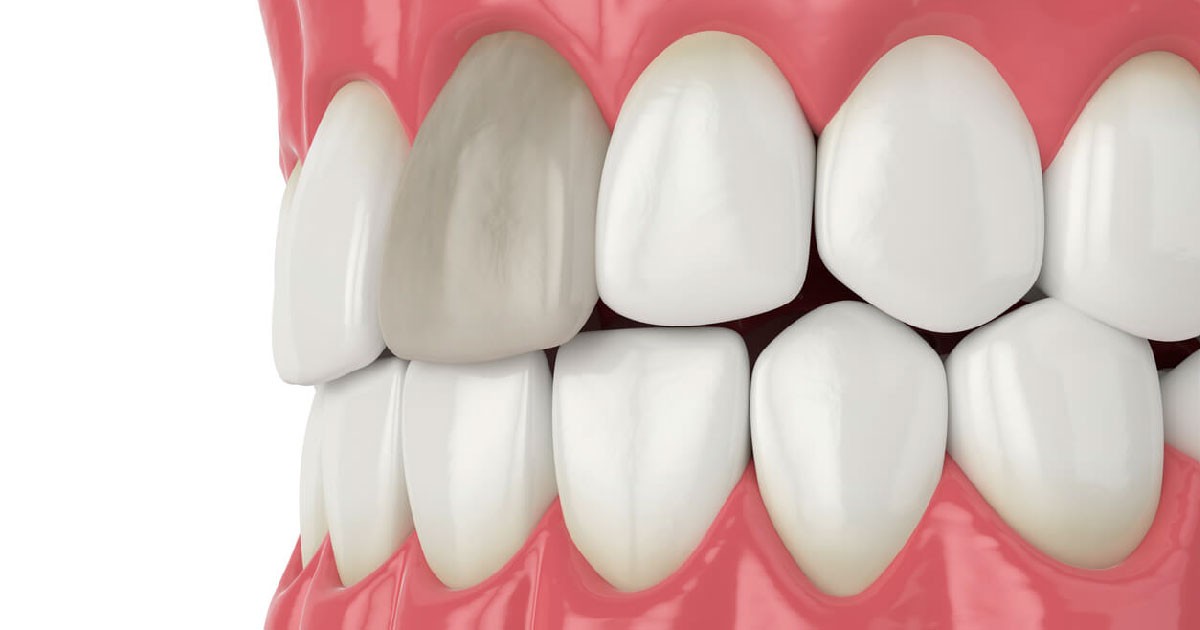
Many people find themselves in a situation where a tooth that was previously treated (for example, after endodontic therapy – root canal treatment) gradually darkens and no longer matches the color of the surrounding teeth. This can affect both your smile and your self-confidence. This is exactly where non-vital tooth whitening comes in – a modern dental procedure that can lighten such a tooth and restore the natural aesthetics of the smile.
1. What Is a “non-vital” tooth and why does it darken?
A tooth is considered non-vital when the dental nerve has been removed, most often after severe damage caused by decay, trauma, or inflammation. Although the tooth is saved through root canal treatment, without the nerve (pulp) it often loses its natural color over time and may become darker than the surrounding teeth.
2. Why does a non-vital tooth darken?
Discoloration of a non-vital tooth can occur for several reasons:
-
Residual blood or tissue inside the tooth after trauma or treatment can alter its color
-
Dead pulp and changes within the tooth structure can cause darkening of the dentin
-
Materials used during dental treatment may contribute to tooth discoloration
This type of discoloration is internal, which is why regular whitening toothpastes or home remedies cannot achieve the desired results.
3. What does “non-vital tooth whitening” mean?
Non-vital tooth whitening is a dental procedure in which a darkened tooth is lightened from the inside using a special gel. Unlike conventional whitening that works on the outer surface of the tooth, this method acts from within and is used when the tooth is non-vital and has previously undergone endodontic treatment.
4. What does the procedure look like?
The non-vital tooth whitening procedure is performed in several steps:
Examination and assessment
The dentist checks the stability of the tooth and confirms that there is no infection present. X-ray imaging is usually required.
Internal access to the tooth
At the site where the nerve was previously removed, the dentist places a special gel, most commonly peroxide-based, inside the tooth.
“Walking bleach” method
The gel remains inside the tooth for a certain period, either between visits or under supervision in the dental office, gradually lightening the tooth.
Follow-up and completion
After a few days or repeated treatments, once the desired shade is achieved, the tooth is permanently sealed.
This process is relatively quick and, in most cases, does not require complex aesthetic procedures such as crowns or veneers, unless the discoloration is very severe.
5. Is the procedure painful and safe?
Non-vital tooth whitening is performed pain-free, with local anesthesia if necessary, similar to other dental procedures. It is carried out exclusively by a dentist, as strong gels are used and must be carefully controlled to avoid irritation of the gums or surrounding tissues. When performed by a qualified professional with proper evaluation of the tooth before and during treatment, the procedure is completely safe.
6. How long does it take and how effective is it?
-
In most cases, 1 to 3 dental visits are sufficient to achieve a natural and even tooth color.
-
The results are usually long-lasting, but they may depend on the condition of the tooth and lifestyle habits, such as coffee or red wine consumption.
-
If internal whitening does not provide satisfactory results, it can be combined with external whitening or other aesthetic solutions, such as veneers or crowns.
7. Benefits of non-vital tooth whitening
-
Restores a natural and harmonious smile
-
Solves dark discoloration that cannot be removed with standard whitening
-
A minimally invasive procedure
-
In most cases, there is no need for crowns
Conclusion
If you have a darkened tooth after root canal treatment or trauma, non-vital tooth whitening is one of the best solutions for restoring the natural color and beauty of your smile without complicated procedures. This simple and effective treatment allows the tooth to blend aesthetically and visually with the surrounding teeth and look natural once again.
17. Decembar. 2025
Podijeli na društvenim mrežama: Facebook