SCHEDULE A FREE EXAMINATION!
+387 51 230 700
 WORK TIME
Monday - Friday
-
08:00 - 20:00
Saturday
-
09:00 - 13:00
Sunday
-
Day off
Address
-
Vidovdanska 2, Banja Luka
CONTACT
Mob:
+387 65 233 88 (VIBER)
Tel:
+387 51 230 700
Tel:
+387 51 230 701
E-mail:
ordinacija@simicdent.com


MENI
- Home
- Services
- ESTHETIC DENTISTRY
- DENTAL PROSTHETICS
- PERIODONTIC
- ORAL SURGERY
- CONSERVATIVE DENTISTRY AND ENDODONTICS
- PEDIATRIC AND PREVENTIVE DENTISTRY
- ORTHODONTICS
- HYALURONIC TREATMENT
- LASER THERAPY
- OZONE THERAPY
- DIGITAL DENTAL X-RAY (RTG)
- Straumann implant placement. A quick and painless routine procedure with an experienced oral surgeon - implantologist - Banja Luka
- Subperiosteal implants
- News
- Team
- Dental tourism
- Contact
-
 English


 English
Irregular Bite (Malocclusion)
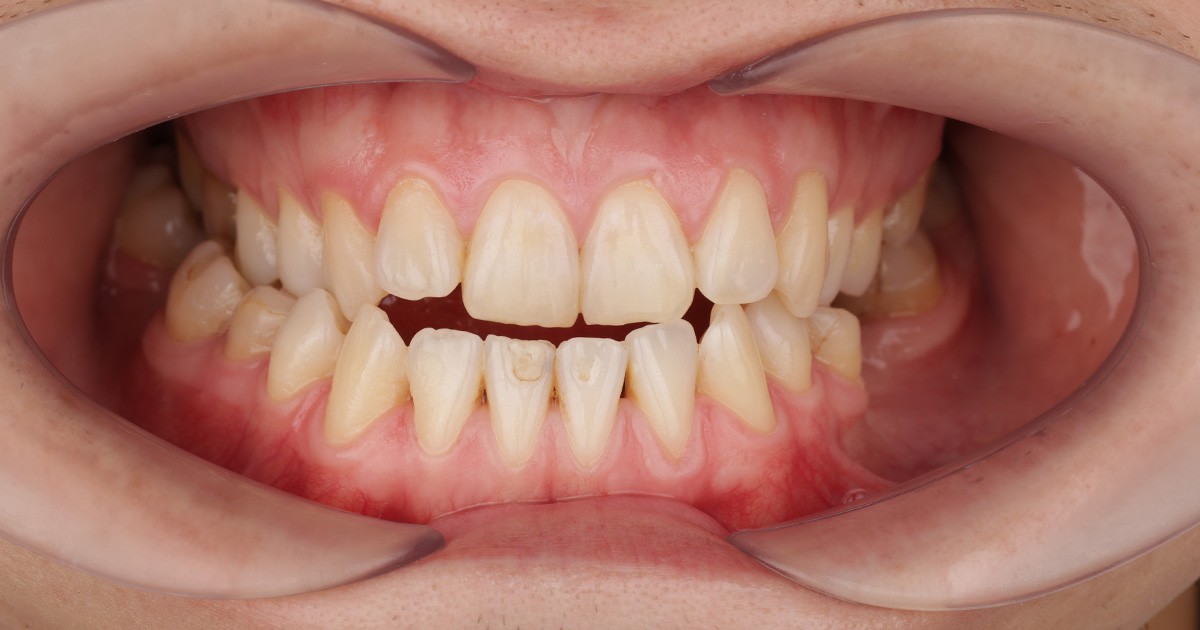
An irregular bite, also known as malocclusion, refers to a situation where the teeth or jaws are not properly aligned — meaning the upper and lower jaws do not “fit” together correctly when biting.
Although many people view this as merely an aesthetic issue, an irregular bite can also affect chewing, speech, gum health, jaw joint function, and even the overall posture of the jaw and face.
1. What Is an Irregular Bite (Malocclusion)?
In a normal bite, the upper teeth slightly overlap the lower ones, allowing for proper chewing and speech.
When this relationship is disturbed — either due to the position of the teeth or the jaws — we are talking about malocclusion, or an irregular bite.
It can be mild and almost unnoticeable, or severe, requiring orthodontic treatment, and in some cases, even surgical procedures.
2. Causes of Irregular Bite
An irregular bite can develop for several reasons:
- Genetic factors – the shape of the jaws, size of teeth, and their arrangement are often inherited.
- Childhood habits – prolonged thumb-sucking, pacifier or bottle use, mouth breathing, or early loss of baby teeth.
- Injuries and diseases – jaw or tooth trauma, gum problems, bruxism (teeth grinding).
- Poor oral hygiene – tooth loss due to decay can cause neighboring teeth to shift and create misalignment.
3. Types of Malocclusion
According to orthodontic classification, there are three main types of malocclusion:
- Class I – normal jaw relationship, but the teeth are crowded, rotated, or tilted.
- Class II (distal jaw position) – the upper jaw is positioned forward relative to the lower jaw.
- Class III (mesial jaw position) – the lower jaw is positioned forward relative to the upper jaw.
In addition, there are specific irregularities:
- Open bite – the teeth do not touch when the mouth is closed.
- Deep bite – the upper teeth excessively cover the lower ones.
- Crossbite – some upper teeth sit behind the lower teeth.
- Spacing (diastema) – gaps between teeth, which can affect both aesthetics and chewing.
4. Consequences of Irregular Bite
An irregular bite can lead to various problems, including:
- Difficulty chewing and digesting food
- Speech difficulties
- Jaw pain and temporomandibular joint (TMJ) issues
- Accelerated tooth wear
- Increased risk of cavities and gum disease
- Loss of confidence due to smile appearance
5. Diagnosis of Malocclusion
Diagnosis begins with a detailed analysis of the teeth, jaws, and facial profile.
Orthodontists use the following tools and methods:
- Clinical examination
- Panoramic X-ray (orthopantomogram)
- Cephalometric X-ray (to analyze jaw relationships)
- 3D dental models
- Intraoral and facial photographs
6. Treatment of Irregular Bite
Treatment depends on the type and severity of the malocclusion:
- Fixed orthodontic appliance (braces) – the most common solution to move teeth into proper alignment.
- Clear aligners (transparent trays) – a modern, nearly invisible alternative, especially popular among adults.
- Removable orthodontic appliances – mostly used in children while the jaws are still developing.
- Oral surgery – required in severe cases where jaw position needs correction.
- Retention phase (retainers, removable appliances, fixed retainers) – maintains the achieved result after treatment.
7. When to Start Orthodontic Treatment?
The ideal time for a first orthodontic check-up is between 7 and 10 years of age.
At this stage, potential irregularities can be detected early and prevented.
However, adults can also correct their bite — the process may simply take a bit longer.
8. Why Early Intervention Matters
An irregular bite will not correct itself.
On the contrary, it can worsen over time, leading to pain, aesthetic, and functional problems.
That’s why timely examination by an orthodontist is the best step toward a healthy and harmonious smile.
9. How We Help Our Patients
In our clinic, we take an individual approach to every patient:
- We analyze tooth and jaw position using digital diagnostics
- We create a detailed treatment plan
- We offer modern appliances and aesthetic solutions
- We ensure comfort and long-lasting results
Conclusion
An irregular bite is not only a cosmetic issue — it affects health, function, and confidence.
With timely diagnosis and modern orthodontic methods, it’s possible to achieve perfect harmony between your smile and overall oral health.
30. Oktobar. 2025
Podijeli na društvenim mrežama: Facebook